Showing posts with label narrator. Show all posts
Wednesday, 6 February 2013
Within the ensemble
Working as a narrator you can feel set apart or isolated from the rest of the cast. I only ever spoke to Ryan K or Jack P in this play, and this can feel hard. As I wasn't a 'character' I didn't know who to be which is highly challenging!
However, in a sense the narrator holds the story together by propelling the story forward. What the narrator says is true and has/will happen (supposedly! Unless the narrator is an unreliable narrator, which in this case they are not)
At the very end of the play James himself becomes a narrator of his own story. The main character becomes the narrator and the narrators become observers. This in a sense means that, in fact, the narrators are James, are the story.
Labels:
acting skills,
character development,
childrens theatre,
drama,
narrator,
theatre
Movement and Vocal Skills to develop the character
- Strong projection
I have very tight diaphragm and have to work hard on relaxing enough to project my voice. I find watching videos and training myself at home really helps... here are a few videos I found helpful:
- Clear articulation
I particularly like the "She stood upon the balcony" one and often use it before a show.
These are excellent to use!
- Pace and Use of space
I know I tend to rush my words so I have developing insight into a personal tendency to be rather apologetic in my occupying of space. I am trying to become reflexive in relation to legitimately taking my place within the acting arena and realise that each memeber of the cast has a 'right' to be seen and listened to.
- Texture appropriate to the story telling nature of the piece and Appropriate vocal and physical choices for characters portrayed
- Expression (Shock wide mouth, fear trembling, annoyance tapping my foot)
- Vocal pace (Surprise! Worriedness. Annoyance!)
- Interaction with other narrators (Grabbing someones hand in fear, kneeling down in fear, touching arm to reassure)
- Posture (Openness - broad arm movement and open chest, fear - slouched shoulders, closed arms for protection)
- Voice tone
- Pitch
- Tempo (fast for fear or excitment, slow for soothing)
- Volume (Telling a story compared quietly)
- Use of breath sounds (emotional expression, shouting for joy, breathy for fear)
- Use of silence (telling a story, hang on my words! Its important, listen!)
- Use of weight and physicalization of characters
Narrator
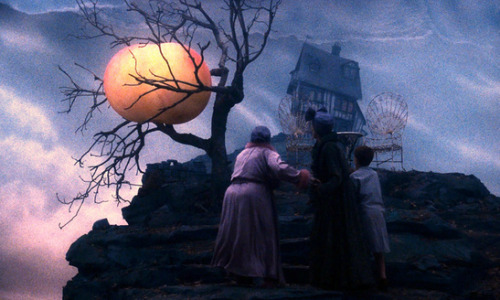
Me and Ryan K were advised that our posture was too intense and leaning forward like the picture left could be construed as aggressive.
We were told to pull our shoulders back, relax our arms and not lean forward (right). I think we were doing this in a sort of "secret telling" way, but it did look aggressive. Also using the gently index-finger holding hand movement is seen as less aggressive that pointing
Shark
Ship
Surprisingly similar technique to what i used with the shark. Slow movements were also needed, the ships heavy, its not going to move fast.
Our poster!
Labels:
childrens theatre,
drama,
james and the giant peach,
narrator,
roald dahl,
theatre
Scene Five - The ship
We (sarah, me and ryan K) were told from the beginning we would be using a handheld puppet of the funnel ship, and that we would have 2D puppets of the ships Captain (Ryan K) First officer (Me) and Second officer (Sarah).
We had a some challenges with the ship, which are best described by the following images:
- The waves were detached and moved side to side held by Becky and Jack P (the problem with this was the waves often got stuck, and that their were too many people in the area)
- The steam shapes also got in the way of us 'on' the ship.
- Next the waves were attached
- This was the final design
I ended up holding the ship and had to remember to keep the ship moving gently and to use my knees to make the ship movements slowly.
Labels:
childrens theatre,
drama,
james and the giant peach,
narrator,
roald dahl,
theatre
Scene four - SHARKS!
This scene went through quite a lot of changes as we progressed but one of the main parts of this scene which set it apart was the many puppets we had to use. Firstly we had to organize what movements we would do around the Peach.
The next type we tried was for two of us to go anti-clockwise and the other two to go around clockwise. Again this seemed to confuse the eye and take the attention off the Peach too much.
The third and final movements are demonstrated in this drawing i made to help me remember what to do:
Even up to the day of the show we made a change to this scene. After our final run-through Chris L advised me to keep focused on the shark and not what was going on in the Peach while I was waiting for the cue to leave.
I had a lot of trouble holding my shark for the relatively long period we were one stage. The small sticks we used on the rod puppet quite hurt my hands, I tried to hold the sticks loosely and carry on.
We added a little bit from the original book because the jump from scene 4 to 5 seemed a little disjointed and it would be easier to understand if we did. I found this part from the book which seemed to fit well.
The narrators each took a sentance which we said whilst we were holding our respective puppet
"As the first seagull flew down, James looped the silk around its neck and attached it to the stem".
Ongoing Targets!
- To enter at the correct cue
- To move down and around the stage slowly
- To attack the peach! (this was added after a couple of shows after our directors realized it looked better
- To attack the members on the peach
- To bend my knees and outurn my wrists whilst holding the shark rods
- To exit early enough that I can grab the ship and prepare to enter again at the right cue (which we often got wrong. To enter before the people on the peach speak about the ship as this makes more sense)
Labels:
childrens theatre,
drama,
james and the giant peach,
narrator,
roald dahl,
theatre
Thursday, 3 January 2013
Plot Summary - James and the Giant Peach
Plot
James meets a strange and unexplained magical old man, who seems to know James plight. The old man gives James a bag of "1000 slimy crocodile tongues" which possess magical properties. James is told to keep them safe, but being in a rush to get back to his home he drops the bag right under an old peach tree.
By the next morning, James Aunt's discover that not only has the previously fruitless tree produced a peach, but the peach wont stop growing! They quickly monopolize the peach, and the paying public come to view the peach.
Meanwhile, James appears not to have returned home, but instead climbs inside the now enormous Peach through a mysterious passage right into the Peach stone. Once there he meets a Grasshopper, Centipede, Spider, Ladybird, Glowworm and Silkworm. All these insects have become enormous and appear to have been given human intellect and power of speech from the magical crocodile tongues James dropped the previous night. The Insects and James cut the giant peach loose and roll down the steep slope from the Aunts house to the sea. Meanwhile, both aunts get squished. Yay!
James is introduced to all the inhabitants, and quickly learns that the insects are far kinder than any humans James had met since his parents died.
Sadly, sharks approach the peach, so James decides to attach the Spiders and Silkworms threads to the necks of seagulls and flies the peach onwards!
Whilst airbourne, the Peach strays into some clouds. In these clouds, the crew of the Peach discover sinister creatures James calls "Cloudmen", who create all sorts of scary meteorological phenomina which the throw down to Earth. James and the crew are pelted with hail stones, but the seagulls drag the peach onwards through the Cloudmen city and right across the Atlantic.
James realises that the peach has been transported all the way to America. The crew all celebrate, but quickly realise the strings attached to the seagulls necks have been slashed by a passing airplane. The peach hurtles downwards, and the all the inhabitants of the Peach believe they are going to die. Luckly though, the Peach lands right atop a building.
The Empire State Building! The crew are brought down and presented to the Mayor of New York, who welcomes them with open arms. All the inhabitants find new jobs, and James lives happily ever after inside the Peach stone, where it has been placed in Central Park. It is revealed that James has in fact written the very story the reader has read.
Reception
This is not without reason, and as a company we must remember that our audience is potentially quite young. Some of the aspects which I believe may need to be tackled carefully are as follows:
- The Rhino eats James' parents - An utterly terrifying idea even to an adult
- The Aunts - James is frequently beaten, verbally abused, overworked and rarely fed. This could be very upsetting to children who will identify with James as he is a young child too. The Aunts are also potentially fear inducing, as they are grotesque and self indulgent to an extreme. This should be treated carefully, and to diffuse the fear factor make them comical not fearful. Personally I think this is one of the problems with the film.
- The Cloudmen - Scary weather controlling people in the sky - Whats not to be afraid of? To make them less scary, they should be magical rather than scary, and perhaps even comedic?
- The Peach freefalling - this is deadly situation, but hopefully the funny responses of the characters will make it less scary and its short period
Labels:
childrens theatre,
Done,
drama,
james and the giant peach,
narrator,
roald dahl,
theatre
Sunday, 30 December 2012
The Narrator - A Character Study
The Oxford English Dictionary defines narrator as:
"a person who narrates something, especially a character who recounts the events of a novel or narrative poem" (1)
The term 'Narrator' comes from the Latin word narr
re meaning 'Knowing'(2). This seems to me to a be a highly reasonable explanation for what a narrator does, they know all (supposedly) and are willing to share their knowledge (normally).
There are different types of narrators (3), such as the:
As to specific techniques for a Narrator I have not been able to find much in the way of websites or books. However, I would assume the following were important:
"a person who narrates something, especially a character who recounts the events of a novel or narrative poem" (1)
The term 'Narrator' comes from the Latin word narr
There are different types of narrators (3), such as the:
- Unreliable narrator e.g. Patrick Bateman in American Psycho or Briony Tallis in Atonement. A narrator who delibratly or mistakenly retells the story in a distorted or untrue fashion, often with a selfish motive.
- The Secret Character e.g. Lemony in A series of Unfortunate Events. A narrator who only pretends to be detached from the story, who is later revealed as a character, and can often be used to great dramatic effect.
- The Detached Observer e.g. George Orwell's 1984. The narrator never inserts their own point of view or uses "I" or "Me".
- The Commentator e.g. A Christmas Carol by Charles Dickens. The narrator who never physically enters the story, but give insight and amusing commentary. This is the type of narrator I believe is in James and the Giant Peach. However the book differs from the adapted play, in that in the book it is revealed that James himself has written the book so James is actually the narrator to his own story. However, this device is not used within the play, and the part of narrator is a separate character. In our adaption we have split the part of narrator into three (as their was a huge amount of speech to learn and it makes the narrator a more interesting device).
As to specific techniques for a Narrator I have not been able to find much in the way of websites or books. However, I would assume the following were important:
- Clear diction - The narrator is the thread throughout the play and if the audience cant understand what you are saying they may miss important bits of information. Also, we are performing for school children its important we encourage clear speaking for learning.
- Energy - We are performing for children, kids like energy and not childish behaviour.
- Ability to interact with children in a enthusiastic manner
- Ability to recognize the children's conceptual age - what can the children easily understand
Subscribe to:
Posts (Atom)